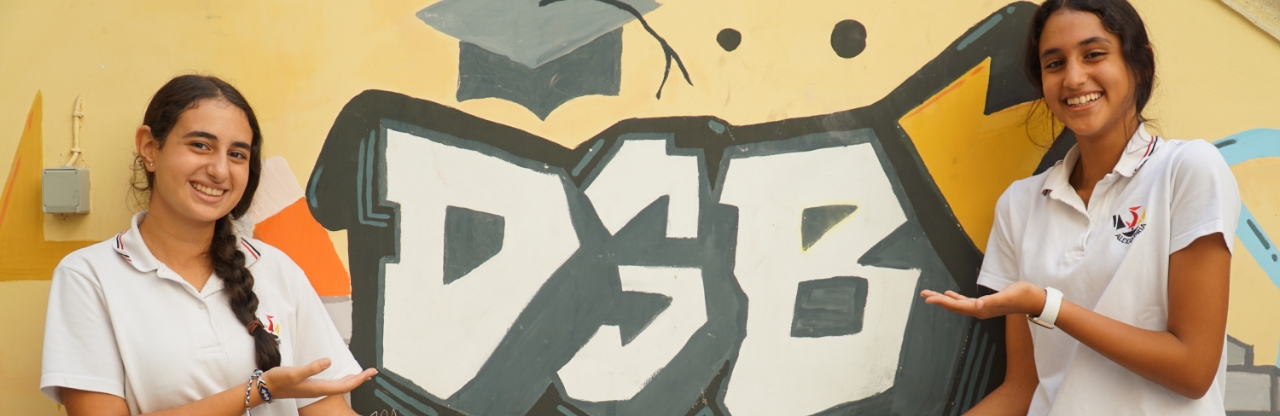

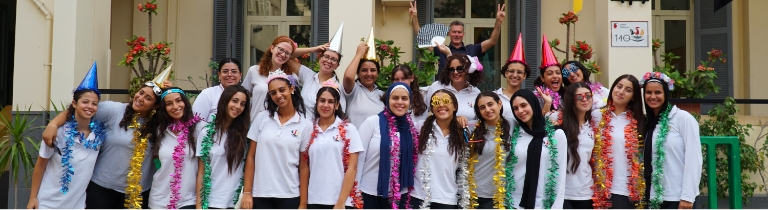
At the Deutsche Schule der Borromäerinnen Alexandria, student voices are valued! Every year, our Students’ Representative Council is newly elected to give students an active role in shaping school life and building strong communication between teachers and classmates.
Each class elects two representatives who act as the link between their peers and the teaching staff. They carry forward ideas, concerns, and feedback, ensuring that every student’s perspective is heard. In addition, they take on responsibility in organizing class activities and strengthening the sense of community.
Supporting them are the sub-representatives, appointed by the class teacher. They play an important role in everyday school routines by helping with tasks such as:
Through this system of responsibility and cooperation, our students learn early on the values of leadership, teamwork, and accountability. The Students’ Representative Council not only strengthens the bond between teachers and students but also empowers young people to take ownership of their school community.
We make sure there are happy faces! We help you to find solutions in difficult situations! We are always there for you, you can come to us with your worries! These are us, the students from grades 7 to 12 who are being trained as mediators.
Our goals are:
– What is mediation?
Mediation is the term for a conflict resolution procedure in which impartial third parties mediate between disputing parties if they cannot come to a constructive solution on their own. Since conflicts can only be resolved in the long term if all parties involved in the dispute contribute to finding a solution, the goal of mediation is to find a solution to the conflict that is as amicable as possible. It is the task of the mediators (teachers) or mediators (pupils) to support the parties to the dispute in constructive conflict management, for example by structuring and accompanying the discussion process.
– Why do we need mediation at our school?
Mediation in schools is an extension of existing approaches to social learning. Mediation programs are elementary building blocks of the educational mandate that the school has in addition to its educational mandate. To ensure the success, continuity and longevity of such a project, forward-looking planning regarding the installation is essential. The mediation approach should be embedded in other pedagogical and educational measures at the school. In addition, a positive supportive attitude of the entire staff contributes to the institutional anchoring of mediation at the school. Based on the BLI report recommendations and the above-mentioned facts, the need to train and establish mediators and mediators also arises at our school.
– How do we proceed?
Information and motivation
– Mediation working group/mediators:
The head of the working group is the school’s mediator.
At the Deutsche Schule der Borromäerinnen Alexandria, learning is not limited to the classroom. With our Learning Without Borders initiative, students from higher grades share their knowledge and skills to support younger students in their studies.
Talented and motivated older students offer online lessons to help clarify difficult subjects, provide guidance, and encourage confident learning. This peer-to-peer support strengthens not only academic performance but also teamwork, responsibility, and mutual respect.
Participation is easy: interested students simply register through the official form and submit their certificate from the previous school year. Once registered, they can benefit from extra explanations and personalized help in a variety of subjects.
Through Learning Without Borders, our school community grows closer together — with older students becoming mentors and younger students receiving the encouragement they need to succeed.
Children Help Children (CHC) is a student-led initiative of the German School of the Borromeans Alexandria (DSBA). Since 2004, our students have been supporting children from the garbage settlement Ezbet El Nachl in Cairo, giving them the chance to go to school and build a better future.
The idea began in a geography lesson, when our students learned about the lives of the “Zabbaleen” families. Living in simple tin shacks and earning their livelihood by collecting and
sorting waste, these families often cannot afford school uniforms, bus fees, or even basic school supplies. Many children are needed to help their parents at work instead of attending school.
Out of compassion grew action: together with partner schools in Bavaria, our students started raising funds to make education possible for around 50 children. Today, thanks to CHC, we support 62 children and young adults – from primary school through university – by covering costs for:
The project is more than financial aid. Over the years, a student exchange program developed, with Egyptian and German students visiting each other, staying with host families, and even meeting the children whose education they help make possible. These encounters have created lasting friendships and cultural understanding.
CHC has also received support from partners such as the Rotary Club Zwiesel-Bayerwald, whose generosity opened new opportunities for many children.
At DSBA, our students commit themselves from Grade 6 to Grade 10 to contribute regularly to the project. This shared responsibility fosters a strong sense of solidarity, empathy, and global citizenship.
Today, CHC is a lifeline for children in Ezbet El Nachl. At the moment, DSBA is the only school continuing this vital support – a mission we are proud to carry forward.
